Komfortkissen: Building a CRO and UX Experimentation Program from Scratch
Overview
Komfortkissen (a German e-commerce brand) had strong traffic but no way to know why visitors weren't converting. No experimentation infrastructure, no behavioral analysis, and product page decisions made on gut feel.
The adasight team was brought in to build a repeatable experimentation program from zero and leave the team equipped to run it independently. 5 experiments over 3 months delivered a 7.5% overall revenue uplift.
The Problem
- No experimentation framework, every UX decision was unvalidated.
- Hotjar installed but nobody was using the data.
- Conversion rate below target with a goal to grow Q1 revenue by 20 to 40%.
- Core PDP elements (size selector, image order, CTA) had never been tested.
The team was operating on assumptions. My job was to replace those with data.
Approach
UX Audit First
Before writing any hypothesis, we audited the Shopify setup and went through session recordings and heatmaps. Two friction points jumped out that conversion data had completely hidden:
- Users barely interacted with the size selector, it wasn't driving decision-making the way it needed to.
- The mobile PDP layout created unnecessary cognitive load, lifestyle imagery led while confidence-building product details were buried.
Experiment Roadmap
We defined baseline KPIs with the client team (conversion rate, add-to-cart rate, AOV, and revenue per visitor) then built a prioritized roadmap where each experiment was scoped with a clear hypothesis, success criteria, and a direct link to the learning before it.
The Experiments
Experiment 1: Dropdown vs. Default Size Selector (Mobile)
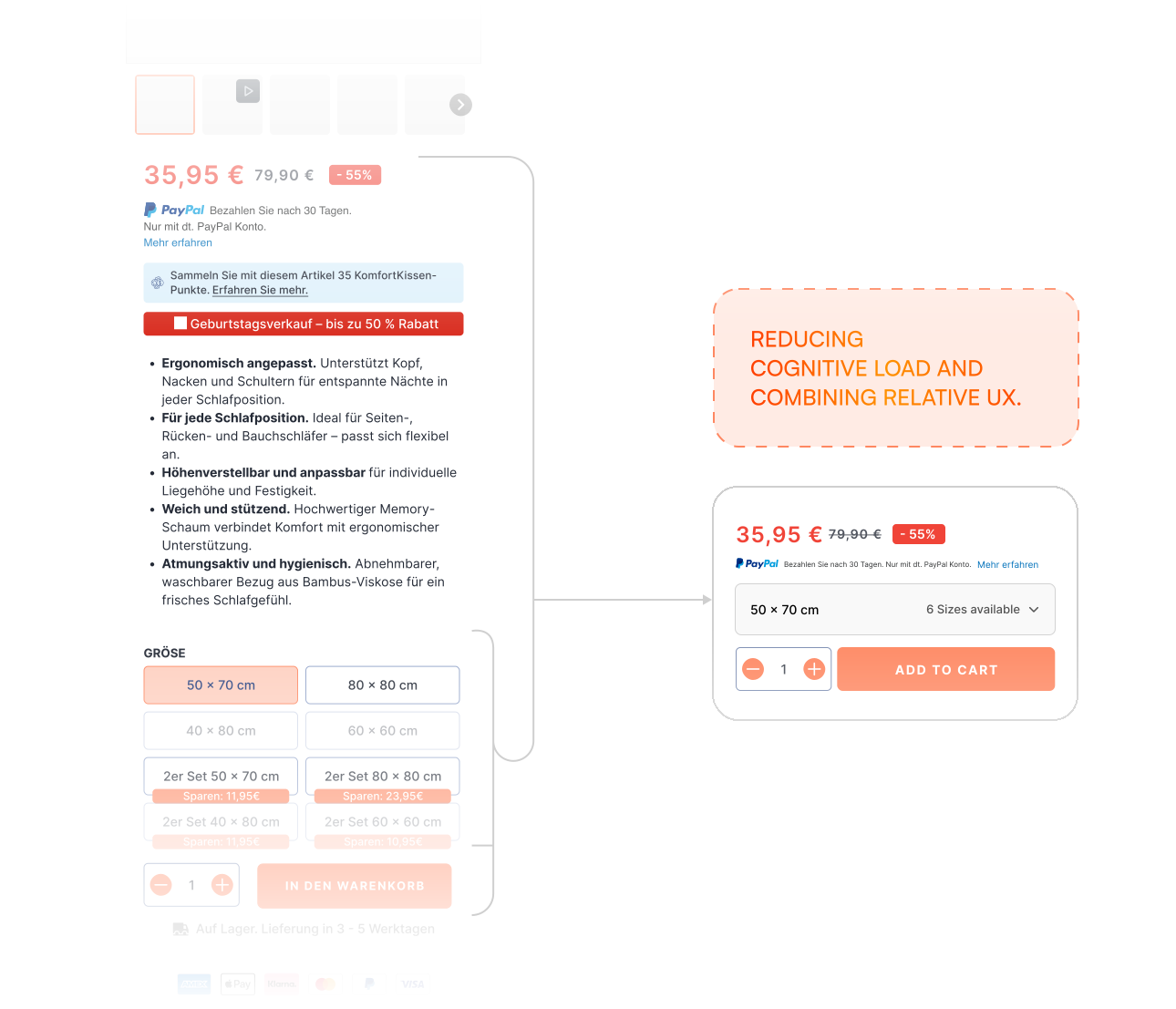
Tested a dropdown against the existing selector. Result: +1.9% CVR and +11.4% CTR. Pointed toward testing a chips-based layout next.
Experiment 2: Chip Selector + Restructured PDP Layout
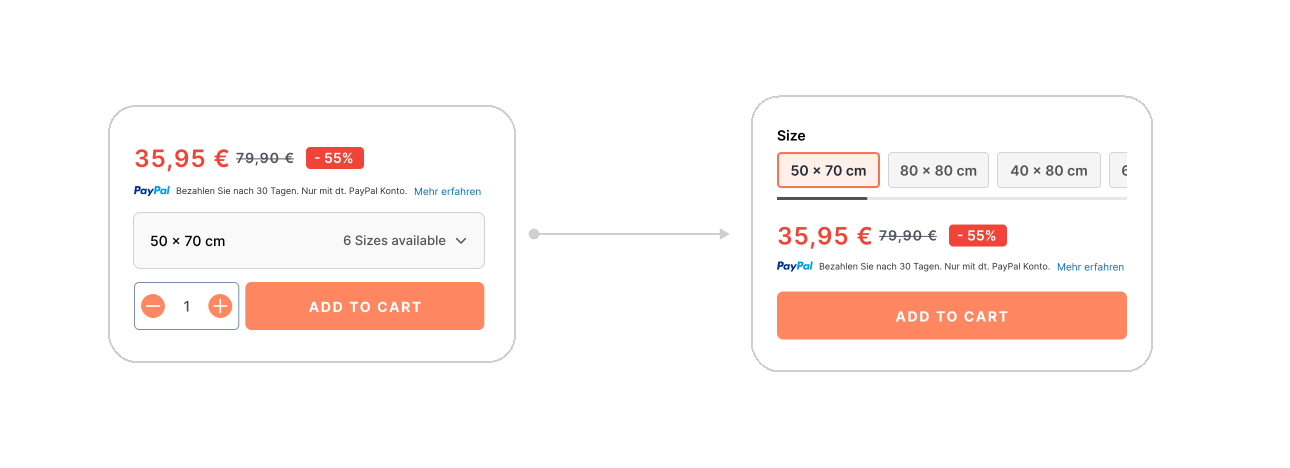
No meaningful CVR lift vs. control, but chips confirmed as the stronger UX. Session data revealed users were pausing on inline price changes, a behavioral insight that shaped the next test.
Experiment 3: Images Above Fold + Chips
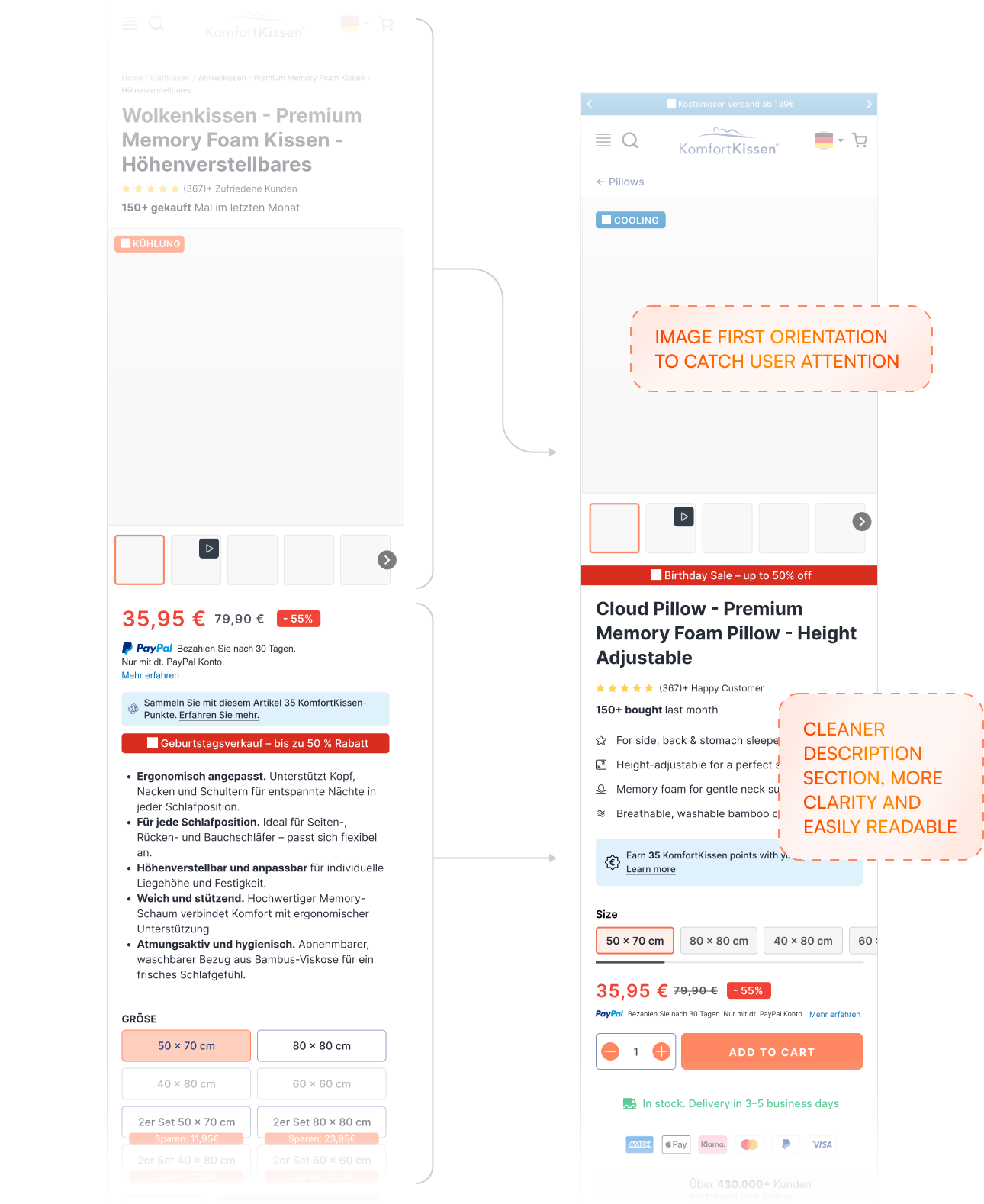
Major win. AOV up +4%, CVR trending +2%, overall revenue uplift +7.5%. Shipped as new default.
Experiment 4: Lifestyle-First vs. Benefit-First Image Order
Komfortkissen had a unique product image carousel strategy where the original sequence started with a lifestyle-oriented image showing how the product fits into the user's daily life, followed by an explainer video, product benefits, technical details, and close-up shots.
After testing a new sequence that placed product specifications and outcome-focused images first, before the lifestyle imagery, the PDP achieved a +13.9% CVR lift, 89% probability of winning, and +8.3% higher revenue per visitor.
The improvement came from showing the product's value upfront. Highlighting the expected outcome and key specifications earlier helped users quickly understand the benefit, increasing confidence and driving more conversions without requiring them to scroll through the entire carousel. This variant was shipped as the new default experience on the premium topper PDP.
Experiment 5: Chips vs. Dropdown Revisited (Segmented)
Overall chips won, but segmentation told a sharper story. Returning users converted 29% better with the dropdown (they know their size, they just want to select it). New users benefited from chips while comparing options. This opened a personalization opportunity estimated at +7.3% incremental revenue from returning users.
Results
| Metric | Result |
|---|---|
| Overall Revenue Uplift | +7.5% |
| CVR Lift on Premium Topper PDP | +13.9% |
| Returning User Personalization Opportunity | +7.3% incremental (estimated) |
| AOV Lift | +4% |
| Experiments Completed | 5 in ~3 months |
Handover
Delivered a full handover package, hypothesis backlog, Figma designs, experiment results, and tooling guidance across AB Convert, Shoplift AI, Hotjar, and session replays, so the team could continue independently.
What I Learned
- Behavioral data finds what analytics misses. Both major friction points were invisible in conversion data and obvious in session recordings.
- Segmentation turns a result into a roadmap. Experiment 5 wasn't just “chips win,” it was a personalization brief hiding inside a test.
- Sequential testing compounds. By Experiment 3, I was assembling validated components, not guessing.
No way you scrolled all the way down this nonsense 😂 As a reward, contact me so I can host you for dinner at this cozy house
 Book a free call